The Cultural Impact of the Tournament
Every March the United States experiences something close to a nationwide sports obsession known as March Madness. For three intense weeks, the NCAA college basketball tournament dominates sports conversations, social media trends, and search engine traffic. Fans fill out tournament brackets predicting which teams will advance often competing with friends, coworkers, and even entire companies in bracket challenges. This unique tradition turns casual sports fans into daily participants who constantly check scores, analyze statistics and follow the drama of unexpected upsets.
From an advertising perspective, this surge of engagement creates a rare environment where attention is both massive and emotionally charged. Sports fans are not simply watching games; they are invested in predictions, rivalries, and surprise victories. This emotional investment dramatically increases screen time. Fans jump between TV broadcasts, live streaming platforms, sports apps, and social media feeds, generating millions of opportunities for digital advertising impressions every single day.
The tournament’s single-elimination format adds another layer of intensity. Unlike traditional leagues where teams play multiple games across months, March Madness gives every match high stakes. One loss means elimination. That tension makes every possession matter, and audiences remain glued to their screens until the final buzzer. For marketers, this means advertisements appear during moments of peak attention, which significantly improves engagement and recall rates.
For publishers and advertisers alike, March Madness functions like a seasonal traffic explosion. Websites covering sports statistics, predictions, or news often see dramatic increases in visitors. The combination of emotional engagement, unpredictable outcomes, and massive digital activity makes the tournament one of the most valuable advertising opportunities of the year.
Multi-Screen Viewing Behavior
Modern sports fans rarely consume content on a single device. Instead, they create a multi-screen experience that allows them to follow multiple games simultaneously while staying connected to online discussions. A typical fan might watch one game on television, track another through a mobile sports app, and scroll through social media commentary on their laptop or tablet.
This behavior dramatically increases advertising exposure. Every additional screen creates another platform where ads can appear. Instead of competing for attention, advertisers can actually surround the user with coordinated messaging across devices. Display ads might appear on sports websites, push notifications may promote real-time offers, and video ads can run before highlight clips or live streams.
The multi-screen habit is particularly strong during the early rounds of March Madness when dozens of games occur within a short timeframe. Fans often track several matchups simultaneously, checking live scores or switching streams to catch the most exciting moments. For advertisers, this means continuous engagement across hours of viewing time, rather than a single short event.
Another important factor is social interaction. March Madness thrives on online conversations about bracket predictions and shocking upsets. A single unexpected victory can instantly dominate social media feeds, sending millions of fans online to analyze what happened. Advertisers who align their messaging with these emotional moments can dramatically increase click-through rates because their ads feel like part of the ongoing discussion.
In simple terms, March Madness is not just a sports event it is a digital ecosystem of excitement where attention moves rapidly across screens. Smart marketers design campaigns that travel with the audience, ensuring their brand stays visible throughout the tournament journey.
Countries to Target for March Madness Campaigns
Core Markets
Although March Madness is an American sports tradition, its digital reach extends far beyond the United States. Streaming platforms, sports betting apps, and social media coverage allow fans around the world to follow the tournament. This global audience creates new opportunities for advertisers who want to diversify their traffic sources and reduce competition in the U.S. market.
The United States remains the core market and generates the largest volume of tournament-related traffic. Brands running March Madness campaigns should always prioritize U.S. audiences first because engagement levels are highest. Fans actively participate in bracket competitions, making them highly responsive to promotions related to sports apps, streaming services, merchandise, and gaming platforms.
However, advertisers focusing exclusively on the U.S. may face rising advertising costs. As millions of brands compete for visibility during the tournament, CPM and CPC rates can increase rapidly. Expanding campaigns to other countries helps maintain stable performance while capturing additional impressions at lower costs.
Key markets to include in a March Madness campaign include:
- United States 🇺🇸
- Canada 🇨🇦
- United Kingdom 🇬🇧
- Mexico 🇲🇽
- Philippines 🇵🇭
- Spain 🇪🇸
- Australia 🇦🇺
- Germany 🇩🇪
- Italy 🇮🇹
- Puerto Rico 🇵🇷
These regions show strong interest in basketball and sports streaming. Many audiences follow NCAA tournaments through international broadcasts or online highlights. Advertisers can capture valuable traffic by adjusting language, timing, and payment models to match regional behaviors.
Expansion Markets for Extra Volume
When advertising demand spikes in the United States, marketers often look for additional traffic sources to maintain campaign performance. International markets provide this opportunity. By running parallel campaigns in other regions, advertisers can continue generating impressions even when U.S. inventory becomes crowded.
For example, Canada and the United Kingdom often show high engagement with American sports events due to cultural and media connections. Meanwhile, countries like the Philippines and Australia have strong basketball fan bases that actively follow global competitions. Even European markets such as Germany, Spain, and Italy contribute meaningful traffic during the tournament.
The strategy is simple but effective. Run core campaigns in the United States while expanding into secondary markets to maintain volume. This approach allows advertisers to capture global attention without depending entirely on one region. When U.S. advertising costs rise during peak games, international traffic can balance performance and keep campaigns profitable
Publishers also benefit from this global reach. Websites offering sports content, predictions, or highlights can attract visitors from multiple regions simultaneously. By combining international audiences with optimized ad placements, publishers maximize revenue during the tournament spike.
Teams Generating Buzz in the 2026 Tournament
Favorite Teams and Front-Runners
Predicting the outcome of a 64-team tournament is notoriously difficult. That uncertainty is part of what makes March Madness so exciting. Every year, fans debate which teams are strong enough to reach the Final Four and which underdogs might create shocking upsets. These narratives play an important role in advertising because they influence what fans search for and discuss online
For the 2026 tournament, several teams consistently appear in expert predictions and statistical models. Programs such as Michigan, Arizona, Duke, and UConn are often mentioned as potential contenders capable of making deep runs in the bracket. Each of these teams carries a reputation that resonates strongly with college basketball fans.
Michigan has gained attention for its analytical approach to basketball strategy and steady performance across the season. Arizona is known for balanced gameplay and disciplined pace control, making them a team capable of surviving difficult tournament matchups. Duke brings a combination of elite talent and championship experience that often performs well under pressure. UConn, meanwhile, has built a reputation as a serious title contender with the consistency needed to reach the later rounds.
Advertisers frequently incorporate these narratives into their campaigns. Creative messaging that references “favorites,” “top seeds,” or “bracket confidence” resonates with fans who are analyzing predictions and building their own brackets. By aligning campaigns with teams that already dominate media coverage, brands can tap into existing conversations rather than trying to create attention from scratch.
March Madness 2026 Key Dates
Full Tournament Timeline
Understanding the tournament timeline is critical for planning advertising campaigns. March Madness is not a single event but a sequence of stages, each generating different levels of traffic and engagement.
| Stage | Date |
|---|---|
| Selection Sunday | March 15 |
| First Four | March 17–18 |
| First & Second Rounds | March 19–22 |
| Sweet Sixteen | March 26–27 |
| Elite Eight | March 28–29 |
| Final Four | April 4 |
| Championship Game | April 6 |
Each stage creates a new wave of online activity as fans update their brackets and analyze matchups.
Early Round Engagement
The early rounds generate the largest traffic volume because dozens of games occur within just a few days. Fans check scores constantly, share highlights, and react to unexpected upsets. Advertisers often use this stage to run high-reach campaigns designed to build large retargeting audiences.
These early rounds are ideal for campaigns focused on app downloads, lead generation, and streaming subscriptions. Because the audience is broad and includes many casual fans, marketing messages should remain simple and engaging. High-visibility formats like display ads and push notifications perform particularly well during this phase.
Final Rounds and Championship
As the tournament progresses, the number of games decreases but the intensity of attention increases. By the time the Sweet Sixteen and Elite Eight rounds arrive, the remaining fans are deeply engaged. They follow every play and spend more time discussing strategies and predictions.
The Final Four and championship game represent the highest emotional peak of the tournament. Although there are fewer games, the audience is massive. These moments are perfect for brand campaigns, premium products, and limited-time offers designed to capture the excitement surrounding the final matchups.
Creative Strategy for March Madness Ads
Winning Ad Messaging
Successful advertising during March Madness feels connected to the excitement of the tournament. Instead of generic promotions, marketers should create messaging that reflects the language and emotions of sports fans.
Some themes consistently perform well during the tournament:
- Bracket psychology – “Confident picks,” “smart choices,” or “winning strategies.”
- Underdog energy – “Upsets happen. Be part of one.”
- Live urgency – countdown timers, flash deals, and mid-game promotions.
- Social proof – messages highlighting the number of fans watching or participating.
These themes resonate because they mirror the way fans already talk about the tournament. When advertisements feel like part of the conversation, engagement naturally increases.
Copywriting Rules
Short and direct messaging works best during fast-paced events. Fans scrolling through scores or highlights rarely stop to read long descriptions. Instead, they respond to quick, energetic calls to action such as:
- Download Now
- Watch Free
- Bet Today
- Shop the Drop
- Try It Free
The goal is not to explain every feature but to create instant curiosity that leads to a click.
Best Ad Formats for the Tournament
March Madness audiences move quickly between platforms, so advertising formats must match this behavior. Several formats consistently deliver strong results during the tournament.
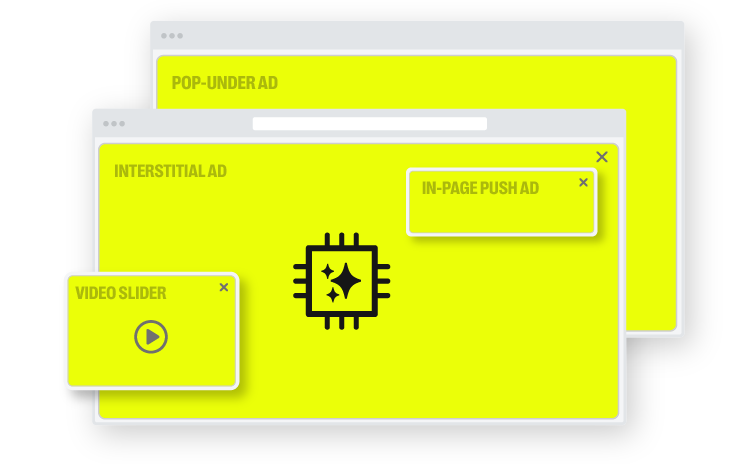
- In-page push ads provide fast visibility and repeated impressions during live moments.
- Display ads offer scalable reach across sports websites and mobile apps.
- Pop-under ads generate large volumes of impressions when maximum reach is required.
- Video ads work particularly well for brand storytelling and highlight-driven promotions.
By combining multiple formats, advertisers can maintain visibility regardless of which device or platform fans use to follow the games.
Choosing the Right Payment Model
Selecting the right payment model is crucial for maximizing campaign efficiency. Each model serves a different purpose depending on the stage of the tournament.
| Model | Best Use |
|---|---|
| CPM | Maximum reach during high-traffic rounds |
| CPC | Driving clicks when engagement spikes |
| CPA | Converting warm audiences into customers |
A practical strategy is to start campaigns with CPM or CPC during the early rounds to build large audiences. Once retargeting data becomes available, advertisers can shift toward CPA campaigns focused on conversions
Monetization Strategy for Publishers
For publishers, March Madness represents a rare opportunity to transform ordinary traffic into a major revenue event. The key is optimizing websites for mobile users, who represent a large portion of sports audiences checking live scores.
Fast loading speeds, responsive design, and strategically placed ad slots significantly increase revenue potential. Publishers should also adjust price floors and demand settings throughout the tournament because advertiser demand rises as the games progress.
Another smart strategy involves capturing long-term value from the audience spike. Collecting email subscribers, push notification opt-ins, and retargeting data allows publishers to continue monetizing sports traffic even after the tournament ends.
Conclusion
March Madness 2026 is short, intense, and wildly unpredictable. That unpredictability is exactly what makes it such a powerful opportunity for advertisers and publishers. Millions of fans follow the tournament with incredible enthusiasm, creating enormous spikes in online attention across websites, streaming platforms, and social networks
Advertisers succeed by aligning their campaigns with the rhythm of the tournament. Running high-reach campaigns during the early rounds, shifting toward conversion-focused strategies in later stages, and creating creative messages that match the excitement of the games can dramatically improve performance.
Publishers, meanwhile, maximize profits by treating March Madness like a seasonal revenue event. Optimizing mobile experiences, adjusting advertising floors, and capturing long-term audiences ensure that the benefits of the tournament continue long after the championship buzzer sounds.
Those who approach March Madness with strategy, timing, and creativity will discover that this three-week tournament can generate results that last far beyond the final game.