Everyone wants better ROAS. Few actually earn it. This chat app advertiser did.
It wasn’t by chasing clicks, but by teaching the algorithm what good looks like. They didn’t reinvent performance advertising. They just played it better, feeding the algorithm more data and structuring a smarter video ad campaign. The success is in the numbers – a daily spend increase from $50 a day to $830.
Why Are Video Ad Campaigns So Effective?
When the ad format mirrors the product, performance follows. In other words, if you’re selling video, use video. Dynamic video ads aren’t just attention-grabbers – they mimic the experience itself. When the product is built around human interaction, showing emotion in action isn’t just logical; it’s powerful.
Here’s why a video ad campaign crushed it in this chat app vertical:
- They build an instant emotional connection
- They’re naturally contextual. Watching people on screen mirrors in-app interaction.
- Online video advertising grabs and holds attention – plenty of time to sell the story.
- They convert spontaneous users. Audiences are spending their time on mobile, where impulsivity rules.
The result? Higher engagement, higher conversions, and a campaign that truly spoke the audience’s language.
What are Video Chat Apps?
Video chat platforms sit somewhere between online communities and dating apps. They’re digital spaces where people meet, talk, and often spend money for premium experiences.
They’ve exploded in popularity for one simple reason: connection. Spontaneous, face-to-face interactions scratch the social itch that static feeds never could. And that makes the vertical a dream for performance advertisers; tons of engagement, emotional triggers, and monetization potential.
So how do we sell connection? You can’t do it with a static image. Time for a video ad campaign to step in.
A Change in (Targeting) Perspective
Initially, the advertiser wanted to track first-time deposits (FTDs). Users would see an ad, register an account, and then deposit an initial amount. The advertiser wanted to ensure their campaign was profitable, so they set a Day 1 ROAS at 25%. In this case, that would be an FTD of $30. This payment gives users access to premium content. Logically, it makes sense. You pay out for an advert only when it leads to profit; there’s no risk of loss.
There is, however, a different kind of loss. If you only track users who make an FTD, you miss a whole chunk of potential customers. This includes users who clicked on the ad and those who registered but didn’t pay. Without access to their data, you miss the opportunity to retarget them.
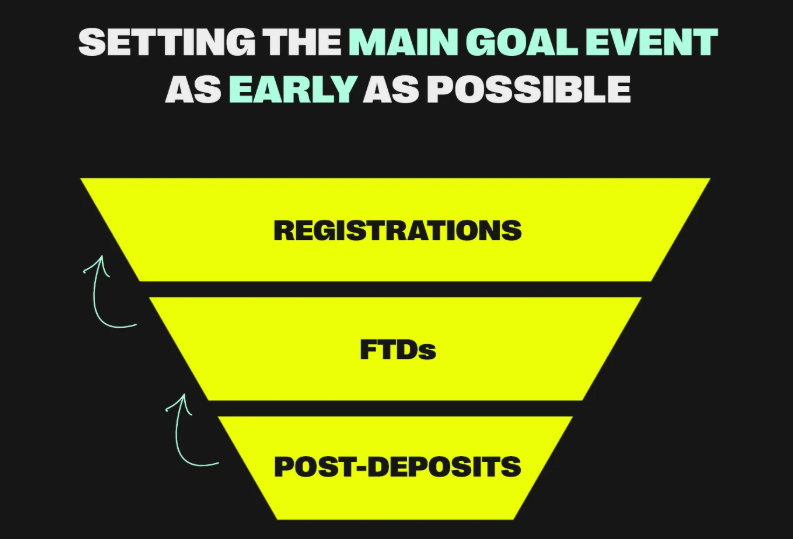
Let’s estimate that 1 in 10 registrations would lead to an FTD. If we track users at the FTD level, the data size would be small. By measuring the metric of registrations, however, not deposits, the advertiser would gain 10 times the data. Data that can be used to optimize the online video advertising campaign.
Campaign Breakdown
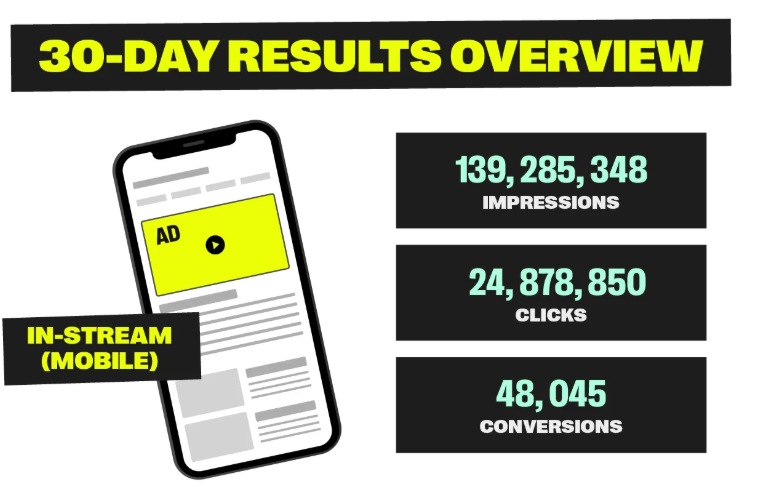
Now you know about the planning behind the video ad campaign, it’s time for the big reveal – cold, hard figures and profits.
Tactics & Strategy
So, how was this data being collected? Initially, the advertiser used a combination of CPA Targeting and CPL (Cost per Lead). Tracking registrations was the goal. By focusing on an earlier conversion event, they gave the algorithm more data to learn from, which led to faster optimization and more profitable results down the line.
The First Campaign
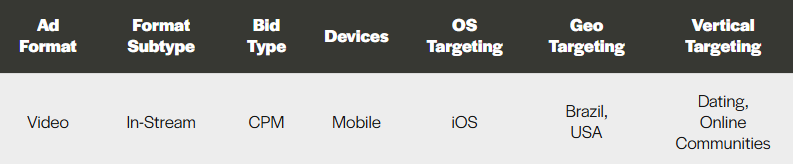
Data was key to their success. After launching their first campaign, data revealed that the offers were only converting effectively on iOS
They went all in on iOS device targeting, launching dozens of whitelist campaigns, targeting separate GEOs. There were also experiments with different ad formats – Pop-Under, In-Page Push, and Interstitial. They finally hit gold with online video advertising.
Dynamic Video Ads
In their creative testing, the team found that dynamic video ads had an impressive performance rate. The closer the ad was to the actual product, the higher the engagement and conversion rates climbed.
That insight changed everything. From there, the team created campaigns with In-Stream and Slider Video ads using CPM. They adjusted each format to match user intent and device behavior. In-Stream ads brought strong conversions through persuasive hooks; Slider Videos drove instant clicks from high-intent users.
The Takeaways
Start broad, then narrow. Begin with wide targeting to collect enough data on what works. Data collection takes a few days. As soon as performance data reveals clear patterns, separate winning segments into dedicated campaigns by OS, GEO, and format. This structure improves algorithm learning, simplifies optimization, and ensures spending is concentrated where ROI is highest.
Track everything. Don’t just focus on final purchases. Track registrations, deposits, and post-deposit actions. The earlier along the funnel you start to monitor, the more signals you feed the algorithm. The more data the algorithm has, the faster it learns who converts and where to find more of them. In short, data is your campaign’s oxygen.
Test creative tone. Sometimes, subtle wins. Don’t assume the loudest, most dynamic video ad will perform best. The advertiser tried a variety of styles, ranging from highly explicit, adult creatives to more casual mainstream concepts. In this case, a mildly provocative visual beat extreme ones. The sweet spot is relevance with curiosity; it attracts clicks without tripping ad fatigue or compliance issues.
Retarget wisely. Your registrants, the ones who haven’t converted yet, are your cheapest goldmine. Retarget them with personalized creatives or light incentives to bring them back. You’ve already paid to reach them once; make that investment count.
Conclusion
Success in performance marketing isn’t about luck; it’s about structure, data, and ruthless optimization.
This video chat platform built a system that honed in on the right audience. They set early goals for conversion. They tracked each event. Auto Rules managed the spending. This turned a complex funnel into a reliable profit engine, massively increasing their ROAS.
Online video advertising brought the emotion. Data brought the discipline. Together, they built a video ad campaign that scaled confidently, not recklessly. If you want to improve your performance, pay attention to your data, and let automation handle the rest.
Equipped with these insights, you’re more than ready to start your own campaign. If you need any further insight, you can always reach out to support.